

Before You Fold: Two Steps That Prevent Most Problems
The majority of wagon cart folding failures trace back to the same two causes: attempting to fold with items still inside, and neglecting wheel alignment before collapsing the frame. Both are easy to avoid, and addressing them first makes every subsequent step straightforward.
Empty the cart completely. Even a lightweight item left in the basket adds resistance that works against the folding mechanism. More critically, hard objects — tools, bottles, boxes — can jam between the collapsing frame sections and either prevent full closure or damage the hinge points. Fabric cargo bags should also be removed or pushed fully clear of the frame rails before folding begins.
Align the wheels. This is the step most instructions skip, and the reason most people get stuck. Folding wagon carts are designed to collapse with all four wheels pointing straight forward — parallel to the direction of travel. If any wheel is turned at an angle, it creates a geometric obstruction that prevents the frame from folding flat. Before attempting to collapse the cart, push it briefly in a straight line, then stop. The wheels will naturally settle into the correct forward-facing position. On carts with swivel casters, manually straighten each wheel and hold the cart still while you begin folding.
The Three Main Folding Mechanisms Explained
Folding wagon carts use one of three mechanical approaches to collapse the frame. Identifying which type you have before attempting to fold it saves significant frustration — the wrong technique applied to the wrong mechanism can stress joints, damage fabric, or simply not work at all.
| Mechanism Type | How to Identify It | Folding Action | Common Use Cases |
|---|---|---|---|
| Pull-tab / center strap | Fabric strap or rigid tab at the center of the floor panel | Pull tab upward while pressing down on frame sides | Consumer outdoor wagons, beach carts, garden carts |
| Side-latch frame | Hinged levers or locking pins along the side rails | Release both side latches, then fold sides inward | Commercial logistics trolleys, warehouse carts, multi-layer retail carts |
| Push-button collapse | Button or trigger on or near the handle | Press button to unlock, guide frame downward | One-click folding hand carts, compact travel wagons |
If your cart came with an instruction sheet, the mechanism type is always identified there. For carts without documentation, a visual inspection of the floor panel and side rails takes less than thirty seconds to determine which system is in use. The full range of metal foldable trolleys and wagon carts spans all three mechanism types, with the appropriate folding method matched to each cart's intended load capacity and use environment.
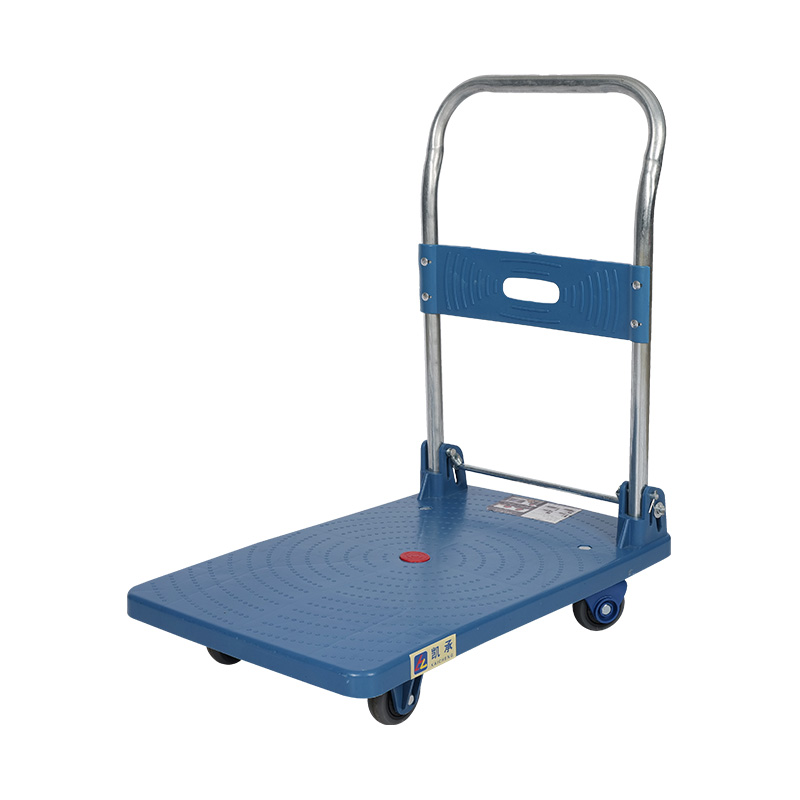
Step-by-Step: Folding a Pull-Tab Center Collapse Wagon
Pull-tab center collapse is the most common mechanism found on consumer-grade folding wagon carts. The folding strap or rigid tab is positioned at the center of the cart floor, and the entire frame is designed to fold inward and downward around a central hinge point when that tab is pulled.
Step 1: Confirm the cart is empty and all four wheels are straight. Lower the handle to a horizontal position if it can be repositioned — this reduces the overall height you are working against.
Step 2: Stand at one end of the cart. Locate the pull tab or fabric strap at the center of the floor panel. On most models it is a loop of nylon webbing or a molded plastic handle sitting flush with the cart base.
Step 3: With one hand gripping the pull tab, place your other hand on the top edge of the nearest side panel. Pull the tab upward firmly while simultaneously pressing the side panel inward and downward. The frame will begin to pivot at the central hinge.
Step 4: Continue guiding the frame inward. The four corner posts will fold toward the center, the side panels will drop, and the floor will rise toward a vertical position. Keep steady downward pressure on the frame to prevent it springing back.
Step 5: Once fully collapsed, secure the folded cart using the built-in latch, buckle, or Velcro strap — whichever the model provides. Do not store the cart unsecured; an unlatched folded cart can spring open unexpectedly. The one-click folding hand carts for fast collapse simplify this entire sequence to a single handle action, which is particularly useful in high-turnover settings where carts are folded and unfolded multiple times per shift.
Step-by-Step: Folding a Side-Latch Frame Wagon
Side-latch frame wagons are the standard design for commercial and logistics applications. The frame is built for heavier loads and more frequent use cycles, and the folding mechanism reflects that — sturdier latches, thicker hinge points, and a fold sequence that keeps the base rigid while the sides collapse inward.
Step 1: Remove all cargo and ensure wheels are straight. For logistics carts that have been loaded heavily, check that the frame has not been pulled out of square — a racked frame will resist folding at the hinge points.
Step 2: Locate the side latches. On most commercial designs these are spring-loaded levers or push-pin mechanisms positioned midway along each side rail. Some models have a single latch per side; others have two per side for added rigidity under load.
Step 3: Release both side latches simultaneously if possible, or release one side and hold it while releasing the other. On high-load logistics carts, the side panels can be under slight tension from the weight of the frame itself — releasing one latch at a time and holding that side in place before releasing the second prevents the frame from shifting unevenly.
Step 4: With both latches released, fold the side panels inward — either both toward center, or one over the other depending on the model's hinge geometry. The base platform remains flat on the ground during this step.
Step 5: Once the sides are folded, the overall profile of the cart is now narrow enough to store vertically or slide into a rack. OSHA's materials handling safety guidelines recommend storing wheeled equipment in designated areas with wheel brakes engaged or wheel chocks in place — particularly relevant for warehouse carts that share floor space with forklift traffic. Multi-layer folding carts for stall and retail use follow this same side-latch approach with the added step of collapsing each shelf tier before folding the outer frame. Warehouse logistics trucks with folding frames are designed for exactly this use cycle — repeated daily folding and unfolding under commercial load conditions.
Troubleshooting: When Your Wagon Cart Won't Fold
Even with the correct technique, some carts resist folding the first few times or after extended use. The following are the four most common causes and how to resolve each.
Wheels are not fully aligned. This is by far the most frequent cause of folding failure. If the cart stops collapsing partway through, straighten all four wheels before attempting again. On swivel casters, lift the front of the cart slightly off the ground and move it gently — the wheels will self-center under their own weight. Set it back down and retry.
Fabric is caught in the frame. The cargo liner or fabric basket can fold into the path of the collapsing frame sections, creating a soft but effective block. Before folding, push all fabric inward and downward away from the side rails and hinge points. On carts where the fabric is removable via Velcro or snap clips, detaching it entirely before folding and reattaching after is a reliable solution.
Latch or release mechanism is not fully disengaged. Side-latch and button-release carts require the locking mechanism to be completely cleared before the frame will move. A half-pressed button or partially released latch leaves the frame mechanically locked. Press release buttons firmly until you hear or feel a click, and hold them depressed throughout the folding motion — releasing too early re-engages the lock.
Frame component is bent or deformed. Overloading — particularly dynamic loading from dropping items into the cart — can bend side rails or warp hinge plates enough to prevent clean folding. Inspect the frame visually along the full length of each rail. Minor bends in steel frames can sometimes be corrected with careful manual straightening; significant deformation indicates the cart has exceeded its design load rating and the affected component should be replaced before the cart is returned to service.
Storing a Folded Wagon Cart Correctly
A cart folded correctly but stored carelessly will deteriorate faster than one used daily but maintained properly. The key variables are moisture, debris, and mechanical stress from storage position.
Clean before storing. Dirt, sand, and moisture trapped in fabric panels and wheel bearings are the primary causes of early wear. After folding, shake debris out of the fabric basket, wipe down metal frame sections with a dry cloth, and check wheels for embedded grit. For carts used outdoors or on unpaved surfaces, rinse wheel housings with clean water and dry thoroughly before storage. Any standing moisture on steel components — particularly at weld joints and hinge points — should be dried and lightly treated with a rust inhibitor if the cart will be stored for more than a few weeks.
Choose the right storage orientation. Most folded wagon carts can be stored vertically — hung on a wall hook or leaned against a wall — which preserves floor space efficiently. Ensure the cart is secured so it cannot tip. Horizontal storage under a workbench or on a shelf is equally effective and places less stress on the latch hardware. Avoid storing folded carts with weight stacked on top of them — sustained compression on the folded frame can permanently deform fabric and stress hinge rivets.
Use a protective cover for long-term storage. A breathable dust cover or storage bag keeps fabric panels from fading and prevents dust accumulation in wheel bearings and hinge mechanisms. Avoid airtight plastic covers over extended periods — trapped humidity accelerates corrosion on metal components. For commercial operations managing multiple carts in rotation, metal fence logistics transport vehicles are engineered for exactly this cycle of repeated use, folding, and storage — with frame materials and hinge specifications rated for high-frequency deployment rather than occasional residential use.


